Understanding the shift towards digital biology
For decades, the journey of a new medicine from a laboratory concept to a pharmacy shelf has been characterised by a long, expensive, and often frustrating series of trial and error. Traditionally, this process relied almost exclusively on two pillars: in vitro experiments, performed in test tubes or petri dishes, and in vivo studies, conducted within living organisms. However, a third pillar has emerged that is fundamentally changing the pace of innovation. This is the in silico model, a term derived from the silicon chips that power our computers.
In essence, an in silico model uses advanced algorithms and massive datasets to simulate biological processes and predict how specific molecules will behave within the human body. Rather than waiting months for biological cultures to grow or navigating the ethical complexities of animal testing at every minor stage, researchers can now run thousands of simulations in a matter of hours. This doesn’t mean the old methods are obsolete, but it does mean we are getting much better at picking the winners before we ever pick up a pipette.

The mechanics behind the simulation
Creating a reliable in silico model is not simply about entering data into a spreadsheet. It involves the complex integration of mathematical biology, chemistry, and computer science. These models are designed to mimic the intricate networks of the human body, from the way a single protein folds to the way an entire organ, like the heart, responds to a new chemical compound. By using high-performance computing, scientists can observe the potential side effects of a drug long before it enters a clinical trial.
The beauty of this approach lies in its ability to handle complexity. Human biology is messy and interconnected. A drug designed to treat a lung condition might have an unexpected interaction with ion channels in the heart. An in silico model allows researchers to test these ‘what if’ scenarios across a vast range of virtual patients, each with different genetic profiles or pre-existing conditions. This level of personalised prediction was simply impossible with traditional methods.
Key components of modern digital models
- Biological Databases: Massive repositories of genomic, proteomic, and clinical data that provide the ‘raw material’ for simulations.
- Mathematical Algorithms: Equations that describe the kinetics of chemical reactions and the physical behaviour of biological systems.
- Machine Learning: AI-driven systems that learn from previous experimental results to improve the accuracy of future predictions.
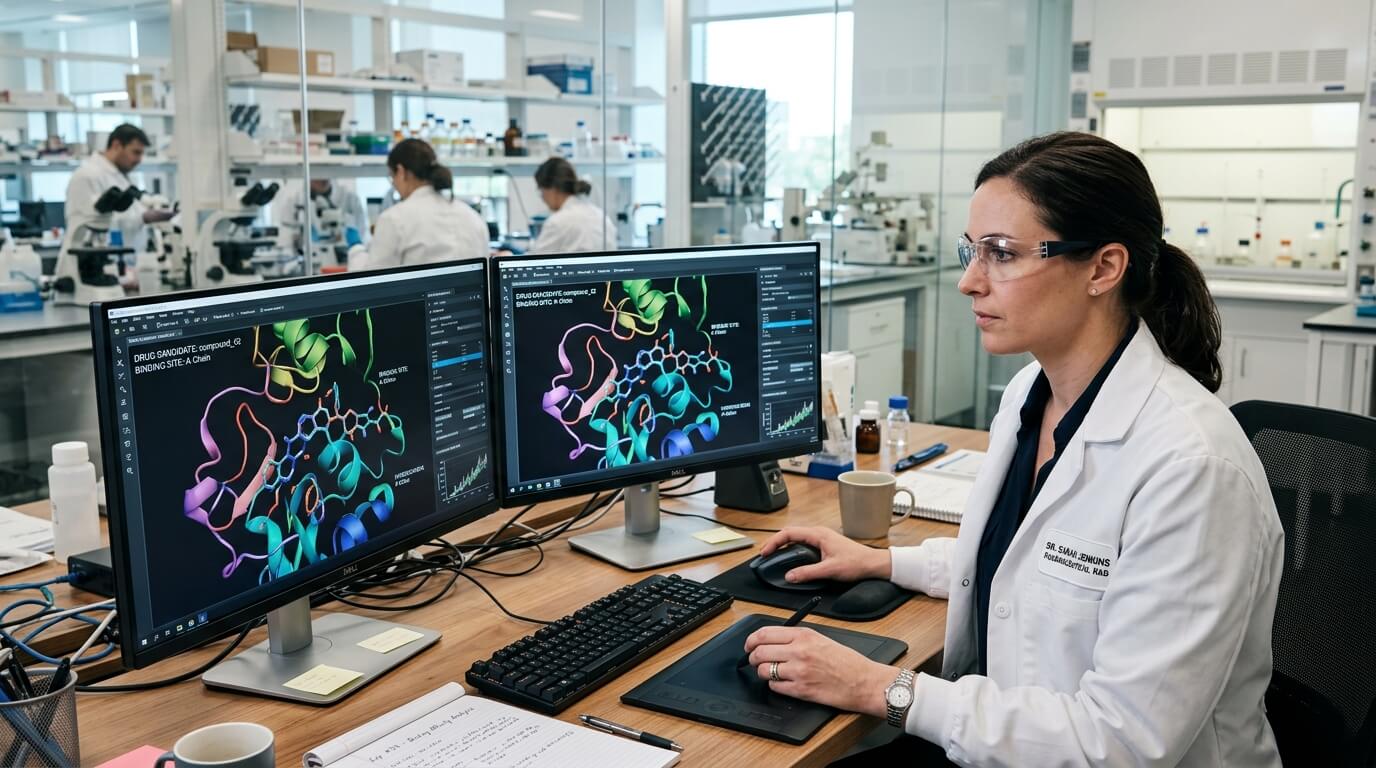
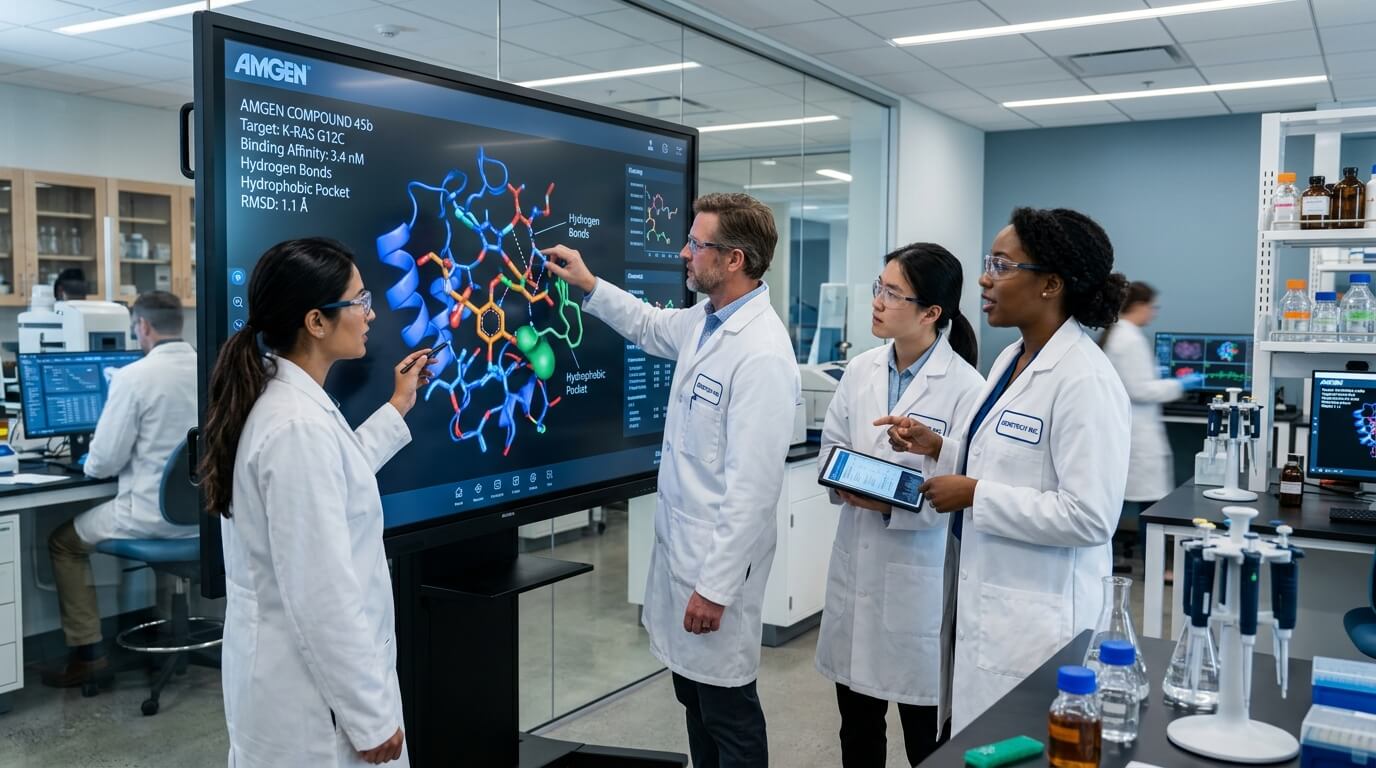
- Visualisation Tools: Software that allows researchers to see 3D representations of molecular interactions in real-time.
Why the industry is finally embracing digital trials
The pharmaceutical industry is notoriously risk-averse, and for good reason. Safety is paramount. However, the rising cost of drug development—now estimated in the billions of pounds per successful drug—has forced a rethink. The adoption of the in silico model is driven by a need for efficiency. When a drug fails in Phase III clinical trials, the financial loss is staggering. If that failure can be predicted years earlier using a computer simulation, the savings can be reinvested into more promising candidates.
Beyond the financial aspect, there is a significant ethical push to reduce the reliance on animal models. Regulatory bodies, including the FDA and the EMA, are increasingly recognising data from computational simulations as valid evidence in the drug approval process. This shift is encouraging more labs to invest in sophisticated software that can accurately replicate human physiology without the need for traditional animal testing.
Practical applications in cardiac safety and toxicology
One of the most successful applications of this technology is in the field of cardiac safety. Assessing whether a new drug might cause arrhythmias is a critical step in development. Historically, this involved the ‘Thorough QT’ study, which is both expensive and time-consuming. Today, researchers use an in silico model to simulate the electrical activity of the heart. By modelling the movement of ions across cell membranes, they can identify potential risks with incredible precision.
This approach is also being used to optimise drug dosing. Instead of a ‘one size fits all’ approach, simulations can help determine how a drug is metabolised by different populations. For example, how does a 70-year-old man with kidney issues process a specific compound compared to a healthy 20-year-old? Digital models provide these answers without putting any real patients at risk during the exploratory phase.
Benefits of integrating digital modelling into the workflow
- Rapid Iteration: Researchers can modify the molecular structure of a drug and immediately see how it affects the simulation.
- Cost Reduction: Fewer physical materials, less lab space, and reduced animal testing lead to significantly lower overheads.
- Enhanced Safety: Identifying toxicities earlier in the pipeline prevents dangerous compounds from ever reaching human subjects.
- Regulatory Alignment: Modern models are designed to meet the evolving standards of global health authorities.
The role of big data and machine learning
The evolution of the in silico model is closely tied to the explosion of big data. As we sequence more genomes and digitise more clinical records, the ‘map’ of human biology becomes more detailed. Machine learning algorithms can sift through this data to find patterns that a human researcher might miss. For instance, an AI might notice that drugs with a certain chemical tail always seem to cause liver stress in a specific subset of the population. This insight is then fed back into the model, making it more robust for the next project.
This creates a virtuous cycle. Every time a physical experiment is conducted, the results are used to refine the digital model. Over time, the digital twin of the biological system becomes so accurate that it can predict outcomes with a high degree of confidence. This synergy between the wet lab and the digital lab is the hallmark of modern, optimised drug discovery programmes.
Navigating the challenges of virtual experimentation
While the potential is vast, it is important to recognise that an in silico model is only as good as the data fed into it. Biology is incredibly complex, and there are still many ‘dark’ areas where our understanding of cellular mechanisms is incomplete. If the underlying mathematical assumptions are flawed, the simulation will produce inaccurate results—a problem often referred to as ‘garbage in, garbage out’.
Furthermore, there is the challenge of computational power. Simulating the interaction of thousands of molecules in a dynamic environment requires immense processing strength. However, as cloud computing becomes more accessible and specialised hardware like GPUs and TPUs continue to advance, these barriers are slowly dissolving. The focus is shifting from whether we can model these systems to how we can make those models more representative of the diversity found in the real world.
The transition to digital-first research is not about replacing human expertise, but about augmenting it. By filtering out the thousands of compounds that are likely to fail, scientists can focus their time, energy, and resources on the few that have a genuine chance of changing lives. The integration of these virtual tools into the standard research workflow represents a more intelligent, ethical, and faster way to bring new therapies to the people who need them most.

A journalist specialising in disability rights, healthcare technologies, and support systems, Nathan focuses on bridging the gap between medical research and real-world impact for disabled communities.